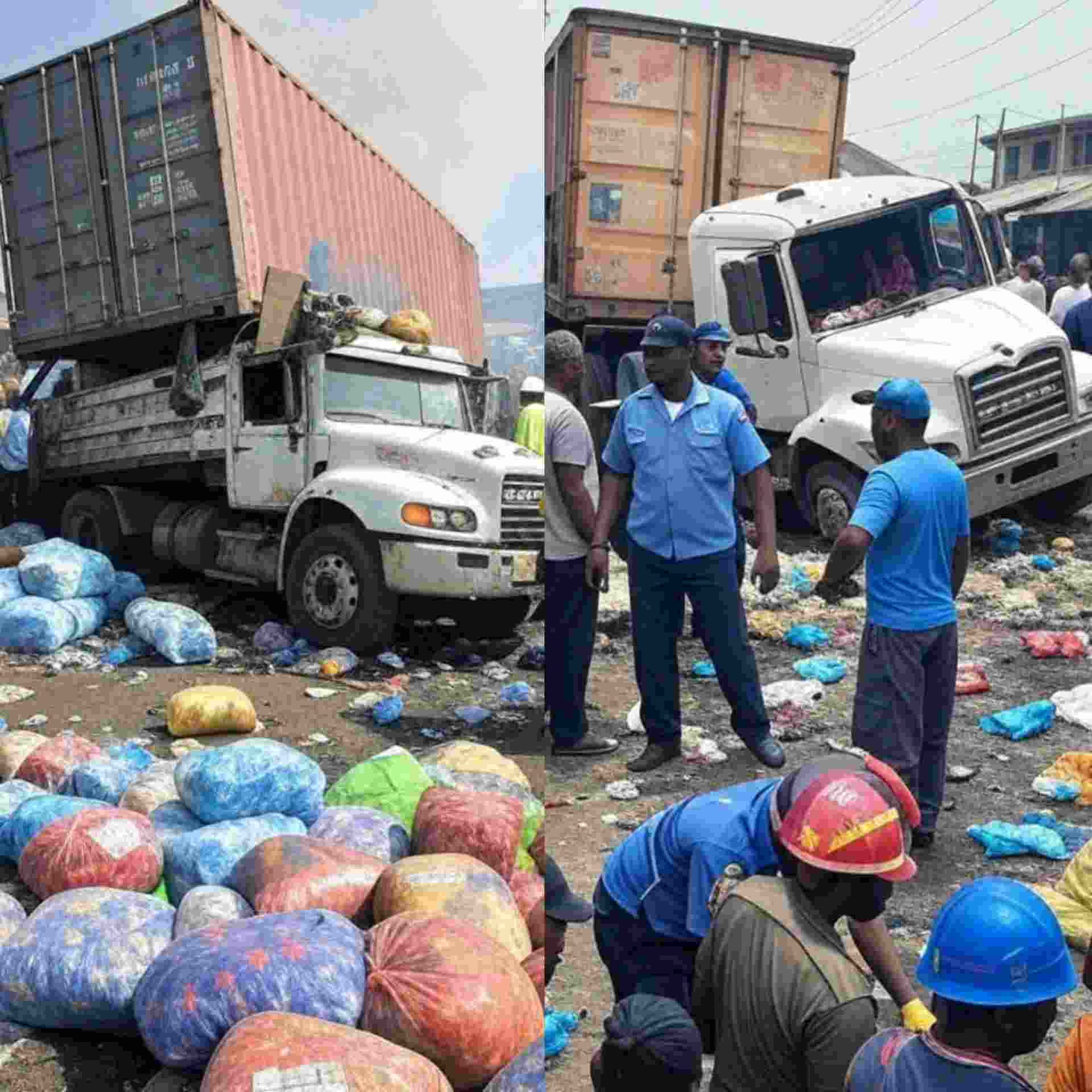

Tragedy at Balogun Market: A Truck's Deadly Rampage Shocks Lagos

It was a typical Friday morning in the bustling heart of Lagos, where the vibrant Balogun Market hummed with life. Traders called out to passersby, commuters haggled for deals, and the air buzzed with the chaotic harmony of Nigeria’s commercial capital. But in an instant, the lively scene turned into a nightmare when a massive MACK truck, laden with a heavy container, careened out of control, plowing through the crowded market. By the time the dust settled, at least two lives were lost, and the community was left reeling from the devastation.
The incident, which unfolded on June 20, 2025, sent shockwaves through Balogun Market, one of Lagos’ most iconic trading hubs. Eyewitnesses described a scene of pure horror as the truck, reportedly suffering from brake failure, barreled into unsuspecting traders, commuters, and bystanders. “It was like something out of a movie,” said Chidinma, a fabric seller who narrowly escaped the truck’s deadly path. “One minute, I was arranging my goods, and the next, I heard screams and saw people running. I didn’t even see the truck until it was too close.”

The chaos erupted around mid-morning, when the market was at its peak. The truck, said to be transporting goods to a nearby port, lost control on a busy road adjacent to the market. Witnesses claim the driver tried desperately to regain control, honking frantically as the vehicle hurtled toward the crowd. But it was too late. The truck smashed into stalls, crushed goods, and struck several people before coming to a stop. The aftermath was heart-wrenching: scattered debris, blood-stained pavement, and the anguished cries of those searching for loved ones.
Emergency responders arrived swiftly, but the damage was done. Two people,a trader and a commuter were confirmed dead at the scene. Three others were rushed to nearby hospitals with serious injuries. “I saw a woman lying motionless near her stall,” recounted Tunde, a motorbike rider who witnessed the tragedy. “Her basket of tomatoes was crushed under the truck. People were trying to help, but it was clear she was gone.” The identities of the victims have not been officially released, pending notification of their families, but the loss has already left a deep scar on the tight-knit market community.
What caused this catastrophe? Early reports point to brake failure, a recurring issue in Nigeria’s overburdened transport system. The truck, described as old and poorly maintained, was not the first to wreak havoc in Lagos’ crowded streets. Just last month, a similar incident in Oshodi left one person injured, reigniting calls for stricter vehicle inspections and road safety regulations. “This is what happens when the government doesn’t care about the roads or the vehicles on them,” said Mama Ngozi, a veteran trader who lost her stall in the crash. “We’re out here trying to make a living, and now we’re burying our own.”
The tragedy has sparked outrage among market traders, who are demanding justice and accountability. Many are pointing fingers at the truck’s owner and the driver, who was reportedly taken into custody for questioning. “Someone needs to pay for this,” said Ade, a shoe vendor whose friend was among the injured. “These trucks are death traps, and nobody checks them until something like this happens.” Social media platforms, particularly X, have been flooded with posts from Lagosians expressing grief and frustration, with hashtags like #BalogunTragedy and #JusticeForVictims trending in the hours after the crash.
As the sun set on Balogun Market, the usual vibrancy was replaced by an eerie silence. Traders began the grim task of salvaging what was left of their goods, while others gathered in small groups, consoling one another. The Lagos State Emergency Management Agency (LASEMA) and traffic officials worked late into the evening to clear the wreckage and restore order. But for those who lost loved ones or livelihoods, the road to recovery will be long and painful.

This heartbreaking incident serves as a stark reminder of the dangers lurking in Nigeria’s bustling urban centers. Balogun Market, a symbol of resilience and commerce, now bears the scars of a preventable tragedy. As investigations continue, the people of Lagos are left grappling with grief, anger, and a burning question: how many more lives must be lost before something changes?
For now, the market mourns, but its spirit endures. The traders will return, the stalls will be rebuilt, and life will go on but the memory of June 20, 2025, will linger in the hearts of those who call Balogun home.














Comments
No comments yet. Be the first to comment!