

The Nigerian internet space has once again been set on fire, and this time the flames are pointing straight at Faruk Akinsanya, the son of popular Lagos transport union leader, MC Oluomo. What began as a quiet complaint on social media quickly escalated into a full-blown scandal after several young Nigerians came forward, accusing Faruk of running a fake cryptocurrency investment training scheme that left them out of pocket and out of answers.
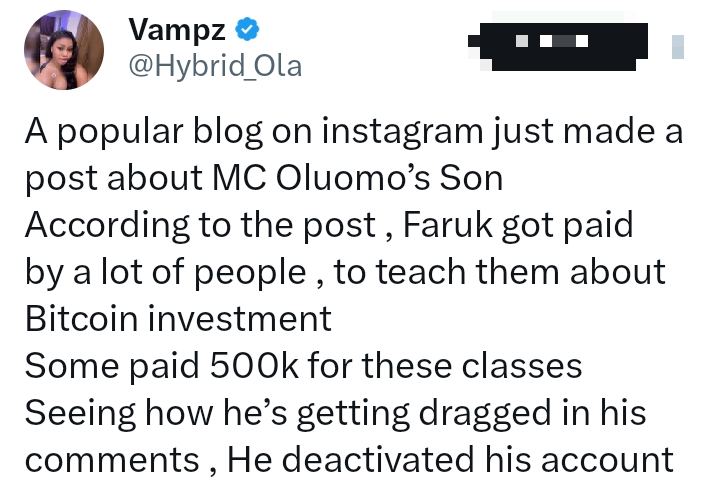
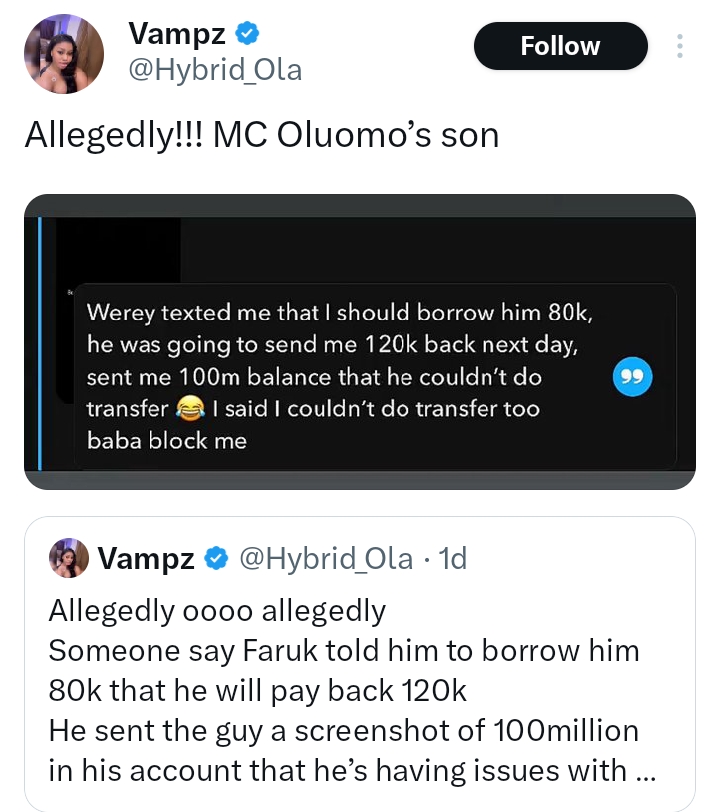
According to multiple reports, Faruk promoted what he described as an “exclusive Bitcoin investment training” through his Instagram and Snapchat accounts. Several followers claimed they were lured by his influencer status and the promise of insider knowledge into the crypto world. They paid as much as ₦500,000 each to be part of the training. But after payment, the supposed training never happened. One victim, who asked to remain anonymous, said she was blocked immediately after transferring the money. “I paid ₦500,000 for this training. Till now, I’ve not heard anything. He stopped responding and blocked me,” she wrote in a message now circulating online.

Screenshots of private messages and payment receipts quickly began to surface across platforms, especially on blogs and gossip pages. Instagram was the center of the drama, with pages like GossipMill and Legit.ng posting detailed breakdowns of the allegations, accompanied by real-time reactions from angry followers. As the backlash intensified, Faruk deactivated his Instagram account, leaving no trace of the controversial offer and cutting off communication with those demanding refunds.
In the midst of the uproar, MC Oluomo defended his son in a separate social media post. He made no direct reference to the scam allegations but stated that he had invested in his children’s education and was proud of their progress. “I trained my children well,” he wrote. “They are doing well, even abroad. You who mock my English, what have you done with your learning?” His response drew mixed reactions - some saw it as a father protecting his child, while others accused him of enabling bad behavior by not addressing the allegations directly.
This case highlights a growing trend in Nigeria where social media personalities, especially those with famous parents or influence, use their platforms to push unverified business offers. The allure of crypto investments, combined with celebrity status, makes it difficult for many young Nigerians to tell scams from genuine opportunities. In this case, the absence of a refund policy, communication, or any form of training after payment clearly pointed to a fraudulent operation, at least in the eyes of the victims.
So far, no official legal action has been confirmed. Neither the EFCC nor the police have issued a statement regarding the matter, although pressure is mounting. Many Nigerians are now calling for an investigation into Faruk’s activities, with some tagging law enforcement agencies on X (formerly Twitter) and demanding arrests.
As the story continues to trend, it serves as a reminder to Nigerians especially the youth not to be blinded by popularity or the promise of quick financial gains. Scams are becoming more sophisticated and personal, and even those in high places can no longer be given automatic trust.
Whether Faruk will resurface to address the issue or if legal action will follow remains to be seen. But one thing is clear: in the court of public opinion, the damage is already done.







Comments
No comments yet. Be the first to comment!