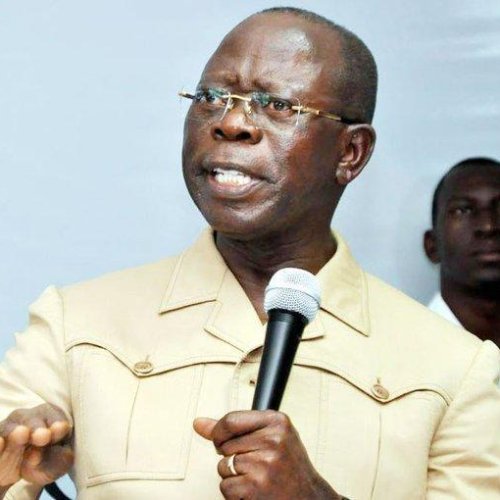

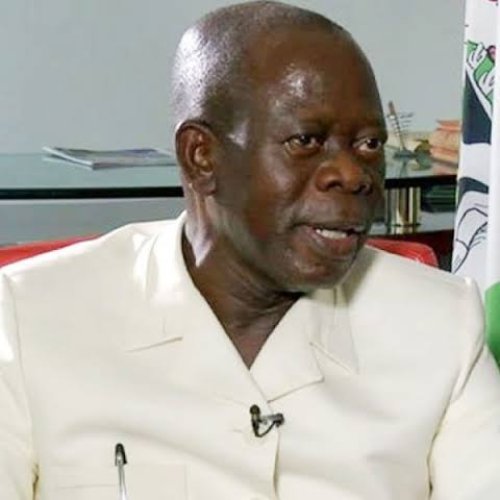
Senator Adams Oshiomhole, Edo North representative, has opened up about his removal as National Chairman of the All Progressives Congress (APC).
He made the disclosure during a recent interview on Africa Independent Television (AIT).
Oshiomhole stated he was sacked via Zoom at the Aso Rock Presidential Villa.
The incident occurred on June 16, 2020, following a Court of Appeal judgment affirming his suspension.
“I was sacked as APC National Chairman on Zoom,” he declared.
Oshiomhole recounted leading the party to victory in the 2019 elections under President Muhammadu Buhari.
He highlighted efforts to resolve National Assembly leadership crises without presidential intervention.
“Once the system got stabilized, I was sacked through a Zoom,” Oshiomhole explained.
He noted failed attempts to remove him democratically.
Ward executives allegedly passed a vote of no confidence based on signatures from eight members.
This led to court actions. An interim order was granted, appealed, and later reinstated by the Court of Appeal.
Oshiomhole described a subsequent National Executive Committee (NEC) meeting held virtually at the Villa.
He claimed he was not invited to the Zoom session.
According to him, the meeting lacked proper quorum yet proceeded to dissolve the National Working Committee (NWC) he led.
This paved the way for a caretaker committee under Governor Mai Mala Buni.
The former chairman alleged powerful interests, including some governors, orchestrated his exit.
His tenure as APC leader from 2018 was marked by internal conflicts and clashes with party stakeholders.
Oshiomhole had earlier blamed figures like former Ekiti Governor Kayode Fayemi for mobilizing against him.
In reflections shared months earlier, he spoke of isolation after the sack.
“After I was dismissed as APC National Chairman, I became lonely, abandoned by my own party,” he said in February 2026.
Many associates distanced themselves fearing anti-party labels.
Oshiomhole credited Rivers Governor Nyesom Wike for support during that period.
The episode exposed deep power struggles within the APC.
Critics viewed Oshiomhole’s leadership as high-handed, particularly in candidate selections and party discipline.
Supporters saw him as a reformist battling godfatherism.
The removal highlighted vulnerabilities in party structures during crises.
It also underscored the role of judicial interventions in internal political matters.
Oshiomhole has since returned to the Senate, remaining active in national discourse.
He continues to engage on issues ranging from economic policy to legislative matters.
The revelations come amid fresh APC tensions and preparations for future elections.
Observers note the statement revives debates on democratic practices within Nigeria’s ruling party.
Oshiomhole maintained he chose not to pursue further legal battles despite opportunities.
He described the experience as politically instructive.
The former labour leader reaffirmed commitment to the APC despite the painful process.
His comments have sparked discussions online, with many recalling the dramatic events of 2020.
The saga remains a notable chapter in APC’s history, illustrating the fragility of leadership positions.







Comments
No comments yet. Be the first to comment!