
Nigerian comedian Ayo Makun, popularly known as AY, has sparked debate after addressing the pressure on celebrities to prove compassion during national tragedies by halting their activities.
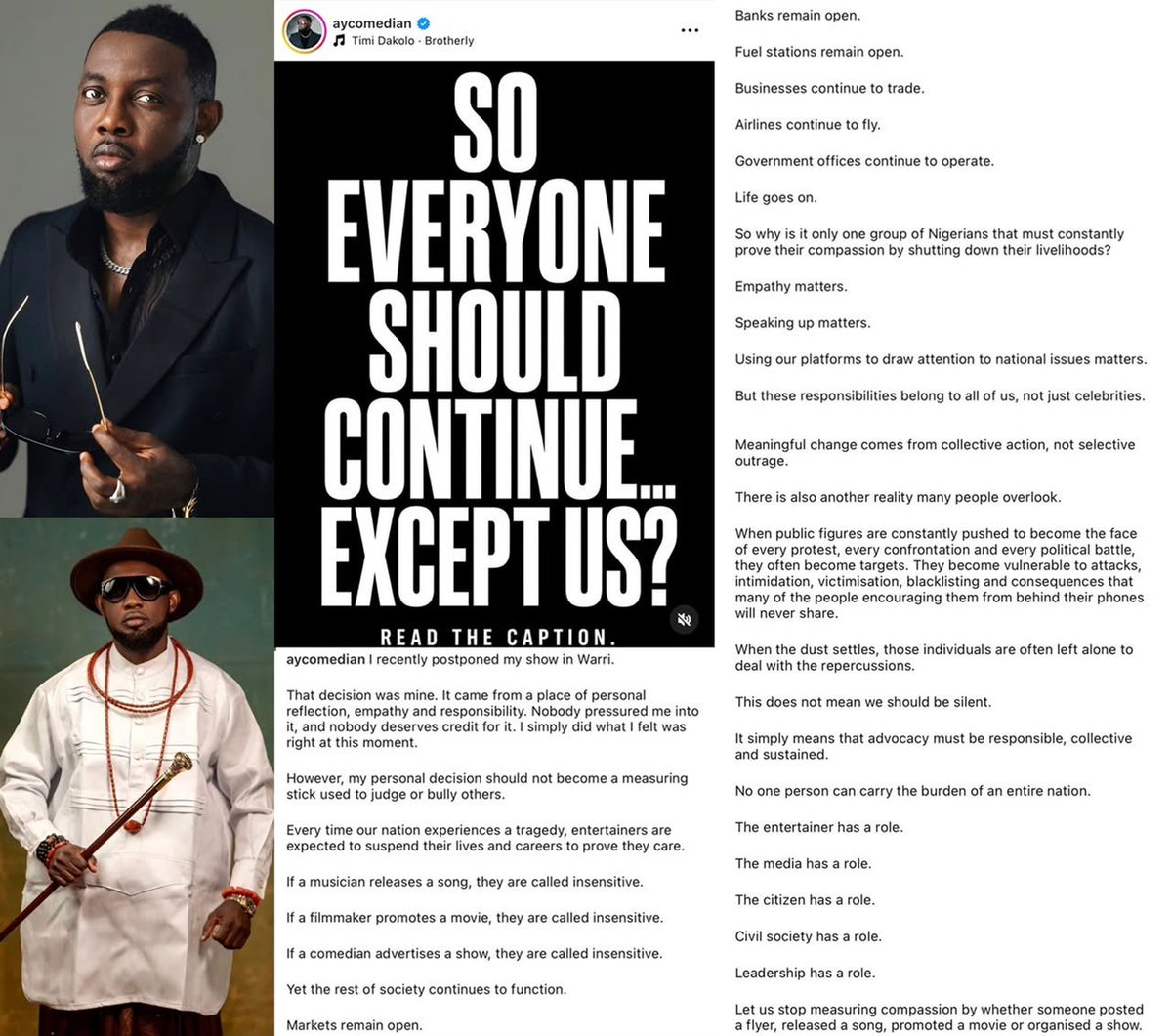
In a detailed Instagram post, AY defended his choice to postpone the AY Live Warri show, originally set for June 12, 2026, following the abduction of schoolchildren and teachers in Oyo State.
"That decision was mine. It came from a place of personal reflection, empathy and responsibility. Nobody pressured me into it," he stated.
AY highlighted the unfair expectations placed on entertainers. Markets remain open. Banks continue operations. Fuel stations stay functional. Airlines fly. Government offices operate. Yet celebrities face backlash for proceeding with shows or promotions.
"Why is it only one group of Nigerians that must constantly prove their compassion by shutting down their livelihoods?" he asked pointedly.
The comedian noted that musicians releasing songs, filmmakers promoting movies, or comedians advertising shows are quickly labeled insensitive. Meanwhile, the rest of society functions normally.
"Empathy matters. Speaking up matters," AY wrote. He stressed that meaningful change requires collective action, not selective outrage.
Public figures, he argued, often become targets when pushed to front every protest or political battle. They face intimidation, victimisation, and blacklisting that fans behind phones rarely endure.
"When the dust settles, those individuals are often left alone to deal with the repercussions," AY observed.
This is not his first call for national reflection. Earlier, following the same Oyo incident, he urged Nigerians to view insecurity as a collective issue beyond politics, tribe, or religion.
His recent post also ties into broader conversations after the death of actor Alexx Ekubo, where AY called for empathy toward celebrities hiding personal struggles.
Critics, however, see his stance as deflection. Some online voices argue celebrities enjoy immense privilege and influence, making their silence or business-as-usual approach during crises appear tone-deaf. They point out that fans expect more from those who profit from public affection.
AY pushed back firmly: "My personal decision should not become a measuring stick used to judge or bully others."
He listed roles for everyone—entertainers, media, citizens, civil society, and leadership—in driving change. "No one person can carry the burden of an entire nation."
The post has drawn mixed reactions on X and Instagram. Supporters praise his candour, while others accuse him of prioritising business over solidarity.
AY's message underscores a recurring tension in Nigeria's entertainment industry. Entertainers are celebrated during good times but scrutinised harshly in moments of national pain.
By sharing his perspective, the Warri-born comedian hopes to shift focus from individual actions to broader societal responsibility. Whether it silences the trolls remains to be seen.
In a country grappling with insecurity, economic hardship, and frequent tragedies, conversations like this expose deep divisions on public empathy and accountability. AY's intervention adds a layered voice to the discourse, challenging Nigerians to look beyond selective outrage.







Comments
No comments yet. Be the first to comment!