

Timilehin Faith Opesusi, a 19-year-old with dreams of studying Microbiology, took her own life after receiving a Unified Tertiary Matriculation Examination (UTME) score of 190 - a result she deemed a crushing failure compared to her higher score the previous year. What makes this story gut-wrenching is the email that arrived just 30 minutes after her death: a provisional admission offer for the very course she longed to pursue.

Timilehin, described by neighbors as “quiet, humble, and full of potential,” lived with her elder sister in Ikorodu, far from her hometown of Abeokuta, Ogun State. The Joint Admissions and Matriculation Board (JAMB) had released the 2025 UTME results on May 9, amid widespread complaints about low scores, with over 1.5 million of 1.9 million candidates scoring below 200. For Timilehin, the 190 was a personal blow, a stark contrast to her 2024 performance. Sources close to the family revealed she felt her dreams slipping away, unable to face the perceived shame of falling short.

On that fateful Monday, Timilehin made a devastating choice. Alone at home, she ingested “Push Out,” a potent rodenticide, before heading to her sister’s office. There, she pleaded for palm oil - a common remedy to counteract poisoning but her sister, unaware of the gravity, dismissed her request. As Timilehin’s condition worsened, she confessed to taking the poison while being rushed to the hospital. Despite desperate efforts by neighbors and sympathizers, she could not be saved. The news of her death spread like wildfire, amplified by posts on X, including one from @NigeriaStories that sparked nationwide mourning.

The cruel irony came moments later. An email from JAMB, offering Timilehin provisional admission to study Microbiology, arrived at 2:47 PM, roughly 30 minutes after her passing was confirmed. The notification, meant to be a beacon of hope, instead became a haunting reminder of what could have been. “She was so close,” a family source told The Guardian, their voice heavy with grief. “If only she had waited.”
This tragedy has ignited a firestorm of debate. Mental health experts, quoted in Punch, are sounding alarms about the intense pressure Nigerian students face under the UTME system. “The UTME is one doorway, not the only one,” a psychologist emphasized, urging schools and families to foster resilience over perfectionism. JAMB, meanwhile, announced a review of the 2025 results due to “unusual complaints,” with 39,834 candidates’ scores still withheld for scrutiny. Yet, for Timilehin, these measures come too late.

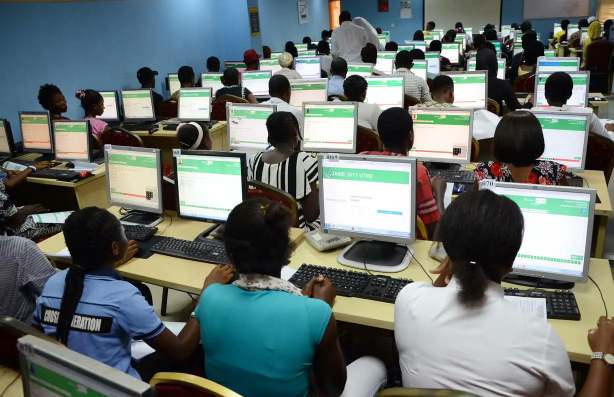
Eyewitness accounts paint a vivid picture of the chaos that ensued. A neighbor recalled Timilehin’s sister screaming for help as the teen’s condition deteriorated, drawing a crowd of onlookers. “She was such a bright girl,” another resident told Daily Trust. “No one saw this coming.” The community, still grappling with the loss, has rallied around the family, but the scars of this day will linger.
Timilehin’s story is a stark reminder of the silent battles many young people fight. Her final act, driven by despair over a number on a screen, underscores a deeper societal issue: the crushing expectation to succeed in a system that often feels unforgiving. As Nigeria mourns, her name has become a rallying cry for change, urging parents, educators, and policymakers to prioritize mental health over marks.

In the end, Timilehin Faith Opesusi’s life was cut short by a moment of hopelessness, overshadowed by an opportunity that arrived just minutes too late. Her story, raw and heartbreaking, demands we listen and act before another young dreamer slips away.









Comments
No comments yet. Be the first to comment!