

The history of the book is not merely a record of changing technology, but a saga of human thought striving to become permanent. It is a journey from heavy clay to light pixels, spanning over five thousand years of innovation.
The Dawn of![]() Permanence: Tablets and Scrolls (3500 BCE – 100 CE)
Permanence: Tablets and Scrolls (3500 BCE – 100 CE)
 Permanence: Tablets and Scrolls (3500 BCE – 100 CE)
Before "books" had pages, they had weight. In Mesopotamia, the Sumerians used clay tablets to record transactions and laws.2 By pressing a reed stylus into wet clay to create cuneiform, they created a medium that, once baked or dried, could last millennia.3

Simultaneously, the Ancient Egyptians looked to the banks of the Nile. They harvested the papyrus plant, slicing its pith into thin strips that were layered, pressed, and dried.4 These sheets were glued together to form scrolls.5
- The Limitation: Scrolls were cumbersome.6 To find a specific passage, a reader had to of material with both hands.7
- The Materials: While Egypt used papyrus, other cultures used palm leaves (India), bamboo slips (China), and even wax tablets (Rome) for temporary notes.
The Great Shift: The Invention of the Codex (100 CE – 400 CE)
The most significant structural change in book history was the move from the scroll to the codex—the format we recognize today as a stack of pages bound at one edge.

The Romans began folding sheets of papyrus or parchment (treated animal skin) and sewing them together between wooden covers.8 The codex was revolutionary because it allowed for "random access": a reader could flip directly to a specific page rather than scrolling through a whole work. It was also more durable and allowed for writing on both sides of the leaf.9. The Art of the Scribe: The Middle Ages (500 CE – 1450 CE)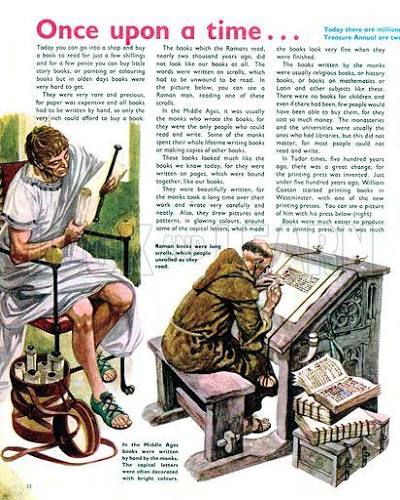
In the medieval period, books were rare, expensive, and holy.10 In monasteries across Europe and the Islamic world, monks and professional scribes worked in scriptoria, copying texts by hand.11
- Illumination: Many of these books were "illuminated"—decorated with gold leaf, vibrant pigments made from semi-precious stones (like lapis lazuli), and intricate borders.
- Parchment vs. Paper: While Europe used vellum (fine calfskin), a major breakthrough occurred in China (105 CE): the invention of paper. Using mulberry bark and rags, the Chinese created a cheaper, lighter writing surface that eventually reached Europe via the Islamic world in the 11th century.12
The Printing Revolution (1450 – 1800)13
For centuries, the "bottleneck" of knowledge was the human hand. In the mid-15th century, Johannes Gutenberg changed the world by combining three existing technologies: the wine press, oil-based ink, and movable metal type.14
- The Impact: Before Gutenberg, a scribe might take a year to copy a Bible.15 With the printing press, hundreds could be produced in the same timeframe.16
- The Spread of Ideas: This "Gutenberg Revolution" fueled the Renaissance, the Reformation, and the Scientific Revolution by making books affordable for the middle class.17
The Industrial and Digital Age (1800 – Present)
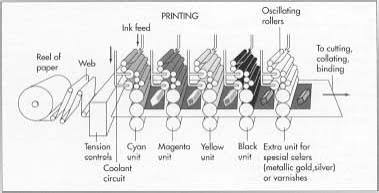
The 19th century brought steam-powered presses and wood-pulp paper, allowing for the "penny press" and the mass-market paperback.18 Books were no longer objects for the elite; they were tools for the masses.
In the late 20th century, the physical book met its first true rival: the e-book. Digital ink and screens removed the need for physical paper entirely, allowing thousands of volumes to be stored on a single device.











Comments
No comments yet. Be the first to comment!