

The history of sugar is not a single "eureka" moment
but a multi-millennium odyssey that spans from the prehistoric jungles of the Pacific to the laboratories of the Industrial Revolution. It is a story that begins with a tall, wild grass and culminates in a global commodity that has reshaped economies, diets, and even human rights.
The Prehistoric Roots: The Chewing Grass of New Guinea

The story begins around 8000 BCE in the island of New Guinea The indigenous Papuan people were the first to domesticate Saccharum office aruma thick-stalked variety of sugarcane. At this stage, "sugar" was not a white powder; it was a refreshment.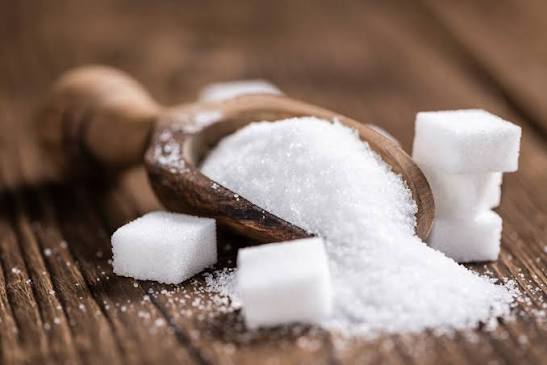
The early cultivators would break off a stalk, peel back the fibrous outer layer with their teeth, and chew on the pulpy interior to release the sweet, energy-rich sap. For thousands of years, this was the extent of sugar’s use. It was a localized "energy bar" for travelers and a treat for village children.
As Austronesian seafarers migrated across the Pacific, they carried "canoe plants"—essential crops for survival—with them. Sugarcane traveled to the Philippines, Indonesia, and eventually reached the Indian subcontinent by approximately 1000 BCE
The Indian Innovation: From Juice to Crystal
While New Guinea gave the world the plant, India gave the world the process.Around 500 BCE during the Gupta Dynasty, Indian chemists discovered a method that would change history: they found that by boiling the extracted cane juice, they could reduce it to a solid state.
The Birth of Shakara
They called these granulated crystals shakara (a Sanskrit word meaning "gravel" or "sand"), which is the linguistic ancestor of the English word "sugar."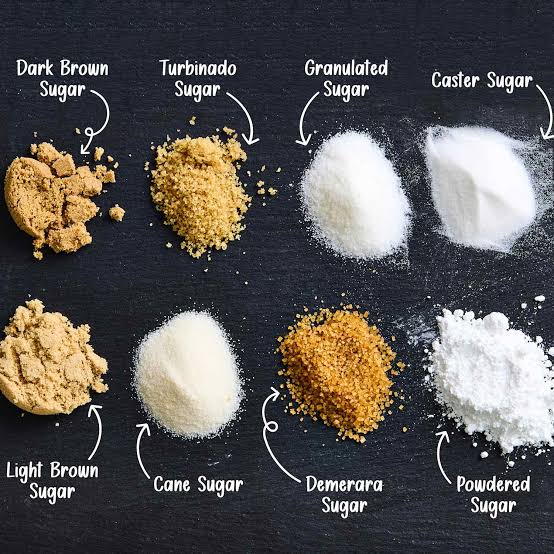
The Process Workers would crush the stalks using heavy stone or wooden presses, collect the juice in large vats, and boil it over open fires.
The Transformation As the water evaporated, a thick, brown syrup remained. If cooled properly, it formed crystals. This allowed sugar to be stored and, more importantly, transported without fermenting or rotting.
For the ancient Indians, sugar was more than a sweetener; it was a luxury and a potent medicine used to treat everything from indigestion to respiratory ailments. When Alexander the Great’s army reached the Indus River in 327 BCE, they were baffled by this "honey which made itself without bees."
The Islamic Golden Age: The "Salt" of the Arabs
In the 7th century CE, as the Arab Empire expanded, they encountered sugar in Persia. The Arabs, legendary for their agricultural and scientific prowess, didn't just adopt sugar they industrialized it.
They introduced sugarcane to the Mediterranean planting it in Egypt, Sicily, and Spain. They developed advanced irrigation systems (the ganat) to sustain the water-thirsty crop in arid climates.
The Refinement: It was the Arab chemists who perfected the "sugar loaf" method pouring syrup into conical molds to create solid, transportable cones. By the 10th century, sugar was no longer just "gravel"; it was becoming a refined, white luxury.
The European Obsession and the Dark Century
Europeans first tasted sugar in large quantities during the Crusades (11th–13th centuries). Soldiers returning from the Holy Land brought home stories of "sweet salt."
Initially, sugar in Europe was so rare it was kept in locked silver boxes and treated as a spice, alongside black pepper and nutmeg. However, as the taste for it grew, so did the demand for land to grow it. Since Europe was too cold for sugarcane, the search for "sugar islands" began.
The Atlantic Shift
When Christopher Columbus sailed to the New World in 1493, he carried sugarcane cuttings from the Canary Islands to the Caribbean. The tropical climate of the Americas was perfect—perhaps too perfect.
The Plantation System:The scale of production exploded. To keep costs low and satisfy Europe’s "sugar fever," colonial powers established massive plantations.
The Human Cost: This era saw the rise of the Transatlantic Slave Trade Millions of Africans were kidnapped and forced into the brutal, back-breaking labor of sugar harvesting and milling. By the 1700s, sugar was the most valuable commodity in world trade, often called "White Gold."

The Scientific Revolution: Sugar from a Root
By the mid-18th century, the geopolitical landscape changed. During the Napoleonic Wars, a British naval blockade cut off France’s supply of Caribbean cane sugar.
In response, Napoleon threw his weight behind a discovery made by German chemist Andreas Marggraf in 1747: the Sugar Beet
Discovery Marggraf proved that the common beet contained the exact same sucrose molecules as sugarcane.
Commercialization His student, Franz Karl Achard built the first beet sugar factory in 1801.
Impact For the first time, sugar could be grown in temperate European climates. This broke the tropical monopoly and eventually helped drive down prices, making sugar a staple for the working class rather than a luxury for kings.
Modern Industrialization: The Centrifuge and the Vacuum
The 19th century brought the final technological leaps that created the sugar we see today:
Vacuum Pans (1813): Edward Howard invented a way to boil sugar at lower temperatures in a vacuum, preventing the "burning" or caramelization of the syrup, leading to whiter, purer crystals.
The Centrifuge (1852)David Weston applied the centrifuge to sugar production. By spinning the mixture at high speeds, the liquid molasses was forced out, leaving behind dry, white granulated sugar in seconds—a process that used to take weeks of draining.
Summary of the Sugar Evolution
| 8000 BC | Wild Cane (New Guinea) Domestication and chewing for sap.
Boiling (India) | Invention of crystallization (Shakara).
Irrigation (Middle East) Large-scale cultivation and refinement.
Plantations (Americas) Industrial scale but fueled by slavery. Sugar Beet (Europe) | Breaking the tropical climate monopoly.
1850 CE Centrifugation | Modern white granulated sugar.
The "invention" of sugar was a 10,000-year collaboration between New Guinean farmers, Indian chemists, Arab engineers, and European scientists. It moved from a wild grass to a medicinal luxury, then to a driver of global conflict, and finally to a ubiquitous pantry










Comments
No comments yet. Be the first to comment!