
In a blistering Saturday evening post on Truth Social, President Donald Trump didn't just warn Nigeria, he lit the fuse. Just 24 hours after branding the West African giant a "Country of Particular Concern" for religious freedom failures, Trump upped the ante with a direct order to the Pentagon: prepare for war. "I am hereby instructing our Department of War to prepare for possible action," he wrote, invoking the long-defunct name for dramatic flair. If U.S. forces strike, he promised, it would be "fast, vicious, and sweet, just like the terrorist thugs attack our CHERISHED Christians!"
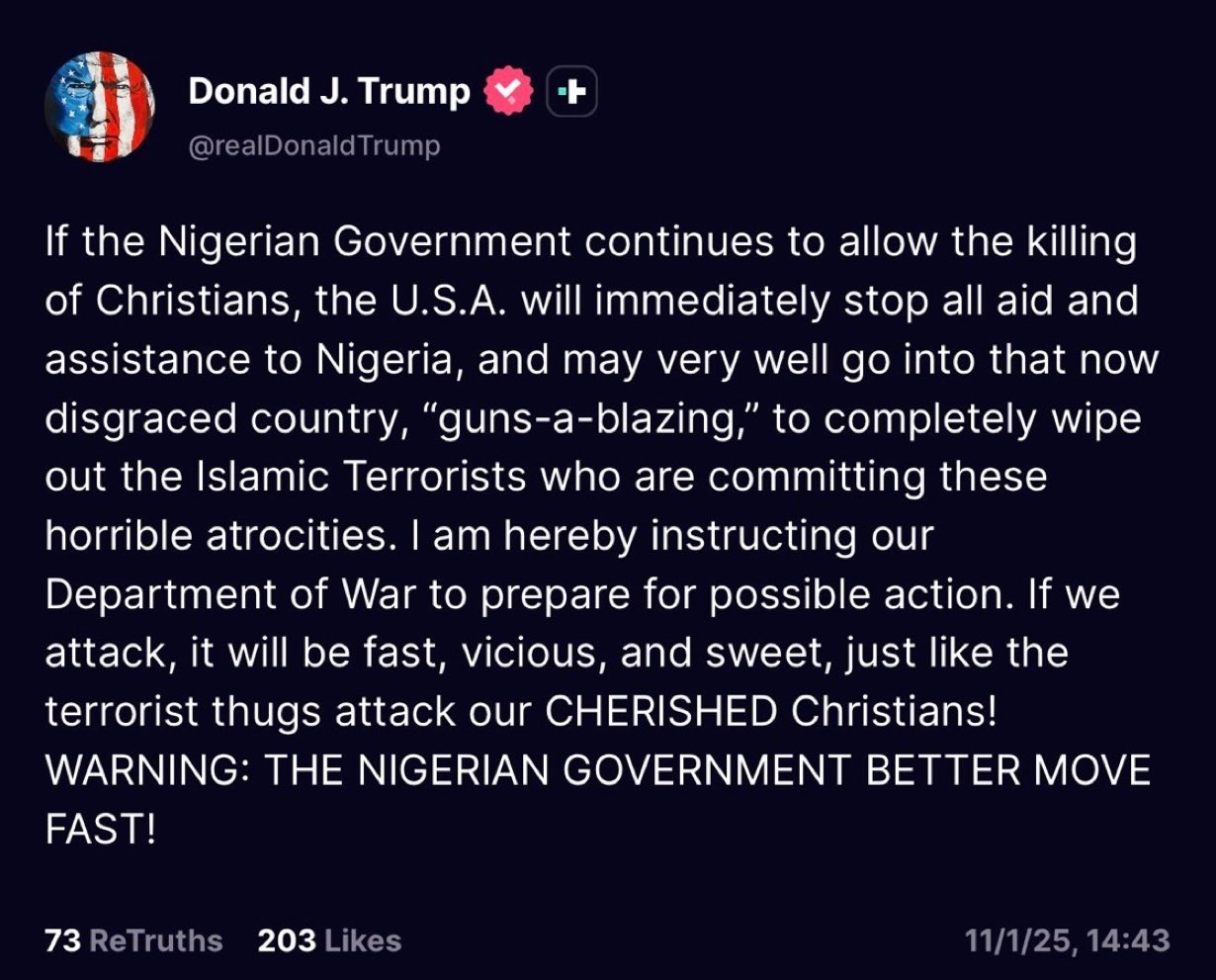

The rhetoric, raw and unfiltered, paints a picture of imminent chaos. Trump accused Nigeria's government of greenlighting a "mass slaughter" by radical Islamists groups like Boko Haram and Fulani militants who have torched villages, kidnapped priests, and left thousands dead in the country's volatile Middle Belt. "May very well go into that now disgraced country, 'guns-a-blazing,' to completely wipe out the Islamic Terrorists," he thundered, tying off all U.S. aid as the first punch. That's roughly $1 billion a year in health, security, and development funds gone in a tweet.
What sparked this firestorm? Whispers in evangelical circles and Capitol Hill briefings. Sen. Ted Cruz has been pounding the podium for weeks, decrying a "Christian mass murder" in Nigeria, where reports peg over 3,100 faith-based killings in recent months alone. Advocacy groups like Open Doors claim 70% of global Christian martyrdoms happen there, fueling Trump's vow to shield believers worldwide. Yet, behind the headlines, sources murmur of deeper politics: a nod to his evangelical base ahead of midterms, or a flex against perceived global inaction?
Nigeria, caught off-guard but unbowed, fired back swiftly. President Bola Tinubu's administration dismissed the "existential threat" narrative as overblown, insisting violence stems from banditry, ethnic clashes, and resource wars not a holy crusade. "Nigeria opposes religious persecution and does not encourage it," a spokesperson insisted, highlighting constitutional protections for all faiths in a nation split evenly between Muslims and Christians. They vowed to crush extremism without U.S. meddling, but privately, aides are scrambling: a sudden aid freeze could cripple anti-terror ops, and whispers of U.S. drones or special forces raids send chills through Abuja's corridors.

The fallout? It's rippling fast. U.S. lawmakers like Rep. Riley Moore hailed Trump as a "champion for Christians," while the House Appropriations Committee gears up for closed-door probes. Overseas, voices clash: Biafran separatists cheer the spotlight, but analysts warn of blowback, escalating jihadist recruitment or even straining U.S. ties with African allies. Nicki Minaj, the rapper with Nigerian roots, sparked a frenzy on X, thanking Trump while her fans debated if this is savior or saber-rattling.
As the sun sets on November 1, 2025, the world watches. Will Trump's "guns-a-blazing" bravado fizzle into sanctions, or ignite something uglier? In a region where faith and fury collide daily, one thing's clear: the line between diplomacy and declaration just got razor-thin. For Nigeria's beleaguered faithful and the superpowers circling - this isn't gossip; it's a gamble with global stakes.







Comments
No comments yet. Be the first to comment!